THE OBJECTION LEDGER
Every hard thing a working set said about planning tools — kept verbatim — and the ability each one produced. This product isn't designed against a wishlist; it's designed against the ways plans actually die.
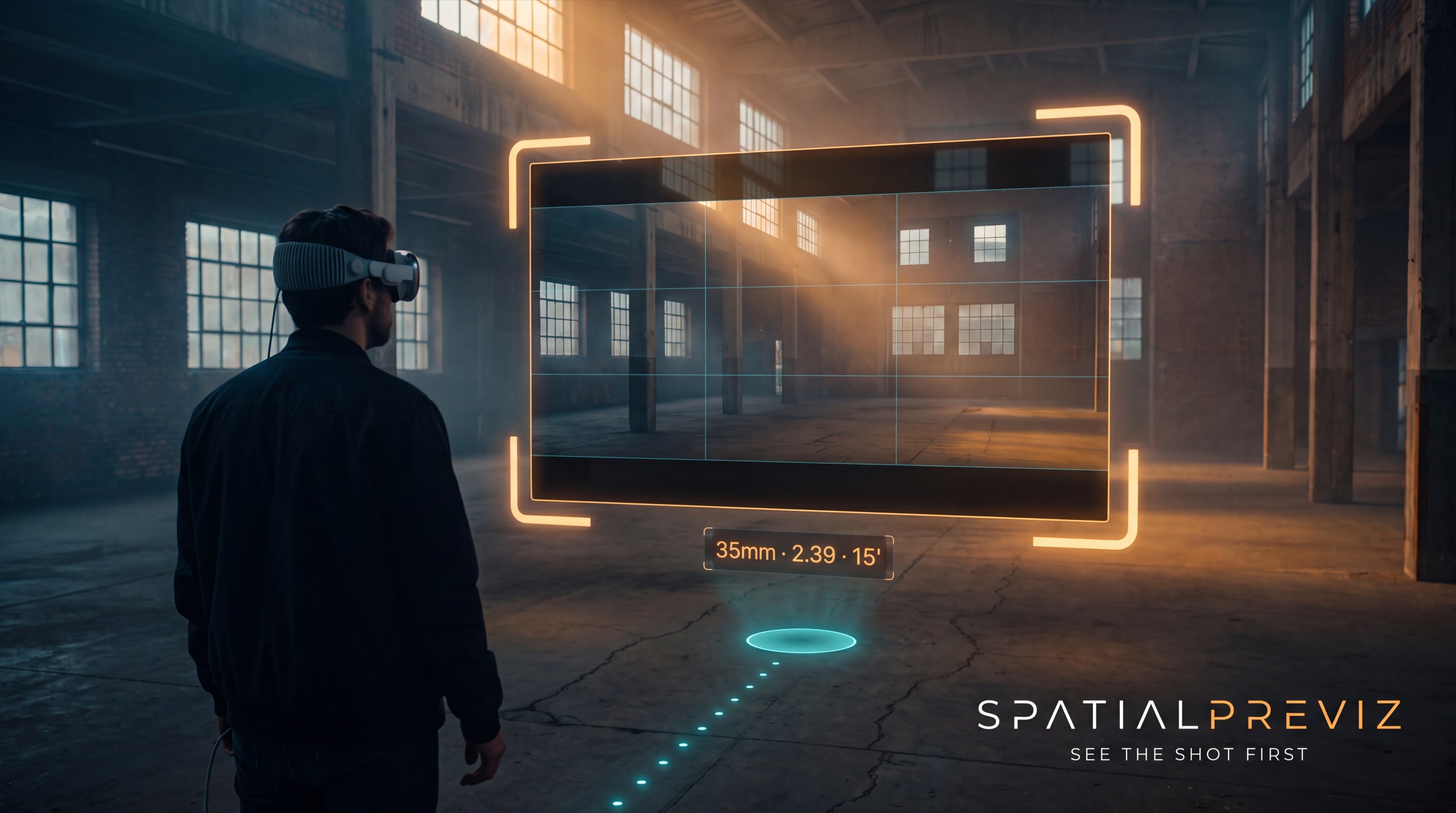
Objections → Abilities
Field source: a working actor off an $80M streaming feature, in conversation 7/7. Open each slate.
The setThere is at least one time a day where the actor goes — no. Back up. Let me do my thing. I've never seen that actor told no.+
What it taught us: the plan takes a bullet daily, by design — star leverage beats premeditation, and the studio will side with the star. A tool that treats its plan as precious becomes the enemy in the room.
HOW IT DOES ITWhen you lock a setup, the tool quietly keeps the geometry of every other way the scene could stage — walk the reverse for ninety seconds and it stores a dormant twin: cameras, lenses, sightlines. When blocking flips on the day, dragging one mark recomputes every camera cone, every collision, every relight implication in a single pass. The cost of "yes" arrives as arithmetic before you finish saying it.
Jon Hamm testWhy am I here? There's gotta be a motivation for me to be here. The truth is I would have came in from over there.+
What it taught us: blocking objections are motivation audits, not tantrums — and the actor is often right. So the tool runs that audit in prep: every suggested position arrives with its reason attached, sourced from the script itself.
HOW IT DOES ITThe script already knows why people move — who they avoid, where they just came from, what they want walking in. The tool reads that intent, then tests every physically possible entrance against it and against the geometry: sightlines, lens throw, the 180° line, all computed from real positions. What survives appears as a ghost in the room wearing a one-line reason. You argue with the reason, not the arrow.
The scheduleYou're never gonna have the actor on a read-through. He's busy, bro. The first time you go through the scene, it happens on the day.+
What it taught us: prep that requires the artist doesn't exist below eight-figure budgets. The only prep that reliably happens is the kind that needs no one — which is exactly what a headset scout is.
HOW IT DOES ITA stand-in isn't a drawing — it's a measured object: true height, on a surveyed mark, inside a frame whose size is computed from your actual sensor and glass. The whole scout happens with nobody present, and every position it produces is millimeter-real — so the crew pre-rigs a plan the star hasn't met yet, and adjusts from facts when they do.
The pivotYou couldn't have known that until you got there — you were looking at it from one perspective, a logistical one.+
What it taught us: some truths only surface in the space. So get the space earlier: score every location against every scene before anyone commits, and carry the location with you afterward.
HOW IT DOES ITEach scene's demands parse into a casting sheet for a place: needs an entrance, a window with a sightline, twelve feet behind camera, plays at night. Every location you capture becomes an audition tape — walkable, measurable, permanent. The tool cross-reads every location against every scene and ranks candidates by scenes-served-per-company-move — the most expensive number on an indie schedule, computed before anyone signs anything. Your library never expires: spaces captured for this script audition automatically for the next one.
The crew truthYou can't film on the fly if your focus puller doesn't know what he's doing. Those are the kinds of crews you build.+
What it taught us: improvisation is purchased with crew excellence — stars get appeased, crews absorb the chaos. The day-of user of this tool isn't the director; it's the gaffer holding a measured overhead when the blocking flips.
HOW IT DOES ITEvery camera position, height, and lens in the report was surveyed by the building itself — placed in a real coordinate system, not sketched from memory. The overhead generates from those coordinates at true scale: the focus puller reads distances that are already correct, the gaffer reads a plan that includes its own alternates. When the day flips, the crew isn't improvising blind — they're turning to page two.
Shamus's ownActors will probably hate it. Executives might think it's the answer to everything — and it still won't solve anything. Is that possible?+
What it taught us (his answer): plenty of shots don't mean much to the actor — technical shots, push-ins, "stare at the pink dot." And whole units run without artists entirely: the stunt / B-unit world operates like militants — exact marks, zero ego, huge budgets. Sell there first.
HOW IT DOES ITWalk the area once and place pads, rigs, and mats as measured objects on the real floor — their positions export straight into the safety paperwork the department already has to file. And every shot in the plan carries a temperament: LOCKED for technical work that survives contact, LOOSE for performance blocking expected to move — so rigidity gets spent exactly where the set will honor it.
AdoptionYou just gotta make it easy. They open it up, they put it on, and it works. That's the problem — the setups and this and that.+
What it taught us: zero-friction onboarding is not polish — it is the entire sale. Every feature ships behind the same bar: open it, put it on, it works.
HOW IT DOES ITNo accounts, no pairing ceremony, no setup screens. Files appear where files already live; a capture becomes an environment by existing in a folder; the first launch is the workflow. Anything that needs explaining gets rebuilt until it doesn't.
The writerI'm not uploading my unpublished script to somebody's cloud.+
What it taught us: pages are the most guarded objects in this industry. So the architecture makes the promise structural: the breakdown runs on the writer's own device — there is no server that could read the script. Only derivatives ever travel.
HOW IT DOES ITScreenplays encode meaning in their margins — action at the left edge, dialogue centered, character cues set deep. The tool reads that hundred-year-old typographic grammar directly in your browser's memory: pages in, structure out, nothing transmitted. There's no server in the loop — not as a policy, as architecture: a place to upload to doesn't exist.
Feature · Advantage · Benefit
CC marks rows shaped or redirected by the field sessions. Right column: what each feature becomes next.
| Feature | Advantage | Benefit | Informs next |
|---|---|---|---|
| Shipped — in the headset today | |||
| Lens-true frames | Real glass, life size, verified math | What you frame is what you'll shoot | zoom-ring scrub (16–35) |
| Cinema formats · 2.39 | Compose inside the shipping crop | No framing surprises in post | per-shot formats in reports |
| Locked shots + rigsCC | Coverage stands in the room | The whole plan, walkable | A/B/C cameras + roles |
| IN SHOT warningCC | Know when you're in a camera's view | Exposure caught at the scout | line-cross + walls (COVERED) |
| Actor stand-insCC | A subject at true height, on a mark | Compose to a person, not air | motivation ghosts |
| Unlock / relockCC | Any shot re-opens in seconds | The plan is cheap to change | Alternates: Plan B, pre-scouted |
| Studio Mode + capture rail | Stand in a place from anywhere · 17× detail | The location, on demand, forever | frames inside the worlds |
| ScriptViz breakdown | Script parsed on your own device | Pages never leave your machine | on-device requirements analysis |
| Next build — every row field-shaped | |||
| The Setup LayerCC | Scene → setups → shots, A/B/C + roles | Plans read like call sheets | "Master, two-shot, coverage, coverage" |
| Coverage LadderCC | The network formula, scaffolded | Pro structure, free, reorderable | one-tap scene scaffolds |
| Flexibility ratingsCC | The plan marks where it bends | Defend what matters, release the rest | report tells the crew which is which |
| Alternates per setupCC | Plan B scouted before it's needed | Say yes to the star in 30 seconds | ghost-swap in one tap |
| Live re-block impactCC | Every change priced when asked | Negotiate with facts | turnaround/relight cost estimates |
| Safety / rigging layerCC | Pads & rigs marked in real space | Stunt paperwork from one walk | the beachhead product |
| Predictive blockingCC | Suggestions with reasons attached | "Why am I here?" answered in prep | line-cross aware coverage |
| Script ↔ space fit check | Locations scored against every scene | Know at the scout, not on the day | location casting across candidates |
The Laws
Every feature above ships under all five.
The frame never lies. Optics are measurement; looks and weather are labeled previews.
Nothing in stone. Suggestions are ghosts until a human locks them. One gesture dismisses anything.
Plan fast enough to throw the plan away fast. Prep buys the confidence to chase the curveball.
Pages stay home. Scripts are read on the writer's device. Only derivatives travel — ever.
Open it. Put it on. It works. Friction anywhere is a defect everywhere.
The tool doesn't protect your plan from the artist — it makes your plan cheap to change when the artist is right. EVERY FILM SET: BEST IDEA WINS
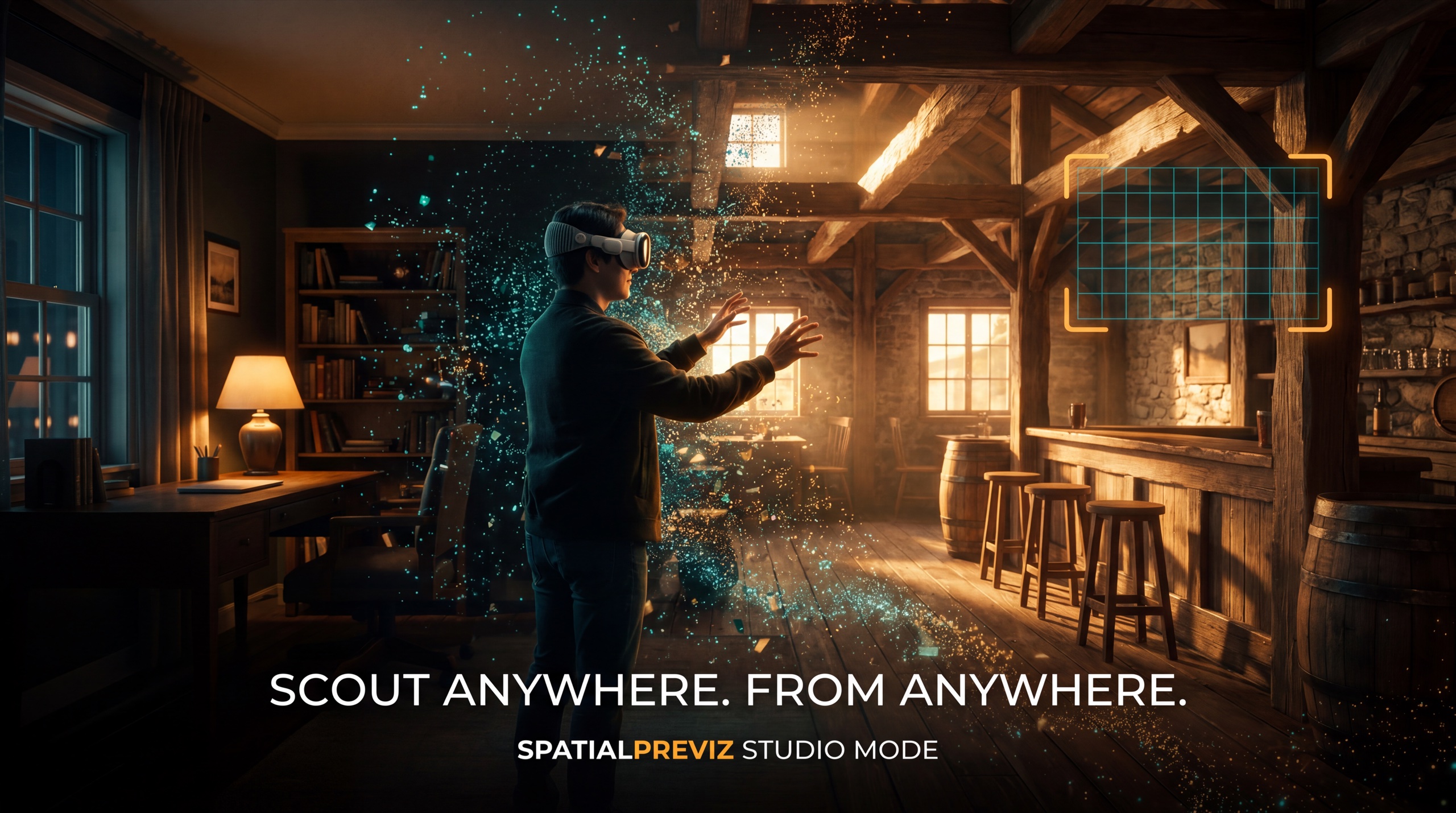
The breakdown runs on this device — scenes, locations, characters, requirements. Your pages never leave your machine.
OPEN THE TOOL →